Wisdom from hinese Literary and Buddhist Classics
365 Days for Travelers
12/24: GATHAS ON THE TRANSMISSION OF TEACHINGS OF THE SEVEN BUDDHAS
Recorded by Shi Zisheng (Years unknown, Song Dynasty)English translation: You Zai
VERSE OF VIPASYIN BUDDHA
The body is born of formlessness; just as all forms are manifested as illusions.
The mind of the seer is originally insubstantial;
both condemnation and blessings
are of emptiness and
non-abiding.
VERSE OF SIKHIN BUDDHA
The arising of all wholesome dharmas
are illusory in nature;
The volitions of all unwholesome karma,
likewise, are illusions.
The body is like a heap of foam,
and the mind like a breath of wind,
Illusory manifestations are insubstantial,
and of no real nature.
VERSE OF VISVABHU BUDDHA
Provisionally perceiving the four great elements as the body;
The mind, originally unborn, exists only due to cognitive objects.
Without the objects of cognition, neither does the mind exist.
Both condemnation and blessings are like illusions that arise and annihilate.
VERSE OF KRAKUCCHANDA BUDDHA
Seeing the insubstantial body as the Buddha’s body;
Realizing that the illusory mind is the Buddha’s mind.
Realizing that the nature of body and mind are inherently empty;
Where is the distinction between oneself and Buddha?
── from Chanmen Zhu Zhushi Jisong
(Verses of the Chan Patriarchs)
GATHAS ON THE TRANSMISSION OF TEACHINGS OF THE SEVEN BUDDHAS
Recorded by Shi Zisheng (Years unknown, Song Dynasty)English translation: You Zai
VERSE OF KANAKAMUNI BUDDHA
One who does not discern the Buddha’s body, realizes the Buddha.
When one distinguishes the substantial, there is no Buddha.
The wise one understands that the inherent nature of condemnation are of emptiness.
And thus calmly and fearlessly accepting life and death.
VERSE OF KASYAPA BUDDHA
The inherent nature of all sentient beings is essentially pure;
From its nature, there is neither non-arising nor non-ceasing.
Such that, this body and mind are manifested as illusions;
Thus, in illusion, there is neither condemnation nor blessings.
VERSE OF SAKYAMUNI BUDDHA
Dharma, in essence,was no Dharma.
Dharma of the emptiness of dharma
is dharma.
Now, to entrust
the emptiness of dharma;
How was the Dharma of emptiness of dharma
ever dharma?
── from Chanmen Zhu Zhushi Jisong
(Verses of the Chan Patriarchs)
What's New?
DECEMBER

Humble Table, Wise Fare
INSPIRATION
Recorded by Leann Moore
Being humble before people,
the road is open wherever you go;
being arrogant before people,
it is difficult to move even one step.

Dharma Instruments
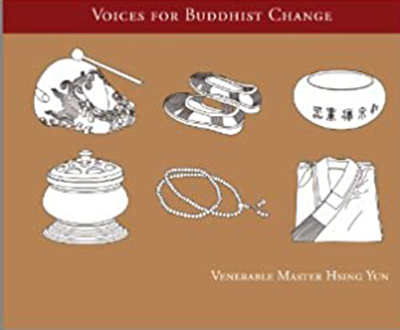
Venerable Master Hsing Yun grants voices to the objects of daily monastic life to tell their stories in this collection of first-person narratives.

Sutras Chanting
The Medicine Buddha SutraMedicine Buddha, the Buddha of healing in Chinese Buddhism, is believed to cure all suffering (both physical and mental) of sentient beings. The Medicine Buddha Sutra is commonly chanted and recited in Buddhist monasteries, and the Medicine Buddha’s twelve great vows are widely praised.

Newsletter
What is happening at Hsingyun.org this month? Send us your email, and we will make sure you never miss a thing!